


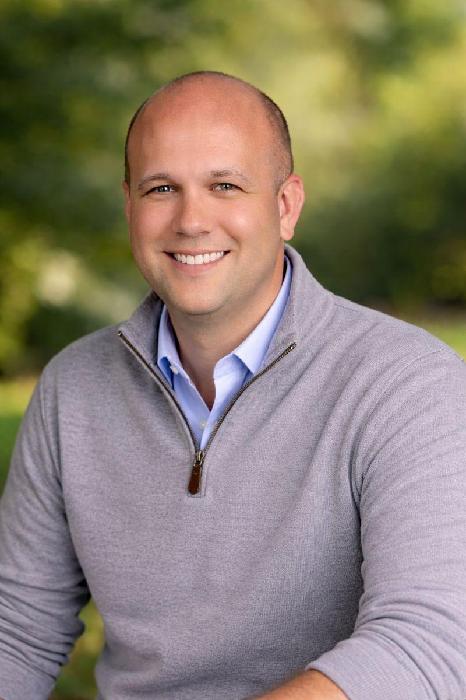
It's hard to protect what you don't know. That's why I'm dedicated to raising heart health awareness-because knowledge is a real game-changer, and it can save lives.
Cardiac arrests can happen anywhere-at work, in our homes, on sports fields, and in our neighborhoods. The readiness of our community can be the key to making the difference between life and death.
On December 29, 2024, at 44 years old, I wasn't prepared. I was sitting at my parents' dining room table, celebrating a late Christmas with my wife and kids, my parents, and my brother's family. It was just another family gathering, filled with laughter, stories, and the usual chaos of kids and pets all under one roof.
Initially, nothing seemed out of the ordinary-just a bit of chest discomfort. I thought it was heartburn from the dessert I was eating, but it didn't go away. I excused myself from the table and quietly asked my mom (a nurse) to follow me into another room.
I sat down on a bed and told my mom what I was feeling, and she immediately sprang into action, grabbing baby aspirin and her stethoscope, which had seen better days from her decades of service. She listened to my heart as I took an aspirin, and for a moment, I felt okay. I walked around, hoping to rejoin the table, but then it got worse.
The pain spread fast... a pain I had never felt before. It was an internal pain that burned across my chest, down my arms to my fingertips. I started feeling dizzy, and then came the cold sweat. That's when fear hit me. As my wife held my hand, I remember thinking, "This can't be happening to me... not here, not now, this cannot be the last memory my family has of me."
We called for help, and that decision was a lifesaver.
Upon arriving at the hospital, the doctors weren't sure what was going on. My lab results were normal, my ECG was fine, but my Troponin I level was elevated. At first, I didn't know what any of this meant. But as we kept checking my Troponin I level every few hours throughout the night, it kept getting higher. That's when I learned that an elevated Troponin I level meant my heart muscle was strained, another sign of my heart being in distress.
With this information, the doctors skipped the stress test and performed an angiogram instead. The hours leading up to the procedure were a blur as I was trying to stay clam for myself, my family... all while still trying to process the information being presented. In the end, two stents were placed in my left anterior descending artery and its diagonal branch due to blockage. For those of you, like me, who aren't medical professionals, that location is called the "widow-maker" because it supplies a large part of the left ventricle.
Looking back, there were signs, but they weren't obvious at first. They were quieter and easier to write-off, like getting out of breath when I walked up a set of stairs (I thought I wasn't in great shape) and feeling tired (of course, I worked full time with three active kids).
Then there were signs that built up slowly over time. I later found out that my years of late-night eating after work events and kids activities (usually sometime after 7 or 8) allowed cholesterol to build up and slowly clog my arteries while I slept. Yes, I went to my primary care doctor for yearly physicals, but I didn't follow up to review my lab results because I was "busy" and "young" so I left it to others to check and ask questions if needed.
Those quiet warning signs did get louder though... about a week before my heart attack, I experienced heaviness in my chest while shoveling my driveway. That last sign stopped me in my tracks (literally). I started talking about what I was experiencing to my wife and mom, as I had a feeling that something wasn't right. With their urging I went to my primary care doctor the following day. They ran a few tests (which came back normal) and we "tried" to schedule a cardiologist appointment, but with the holiday and my own work schedule, I, again, didn't make it a priority.
I'm sharing my story today because I know someone else might be experiencing those same "quiet" warning signs right now. Maybe they feel like they don't have enough time in their day to check their lab results or call their doctor to schedule an appointment. Or, if you happen to find yourself in my shoes like on that December evening, you need to call for help right away.
Do not write-off the quiet warning signs. Make time for your health, see a doctor, ask questions, and trust your instincts.
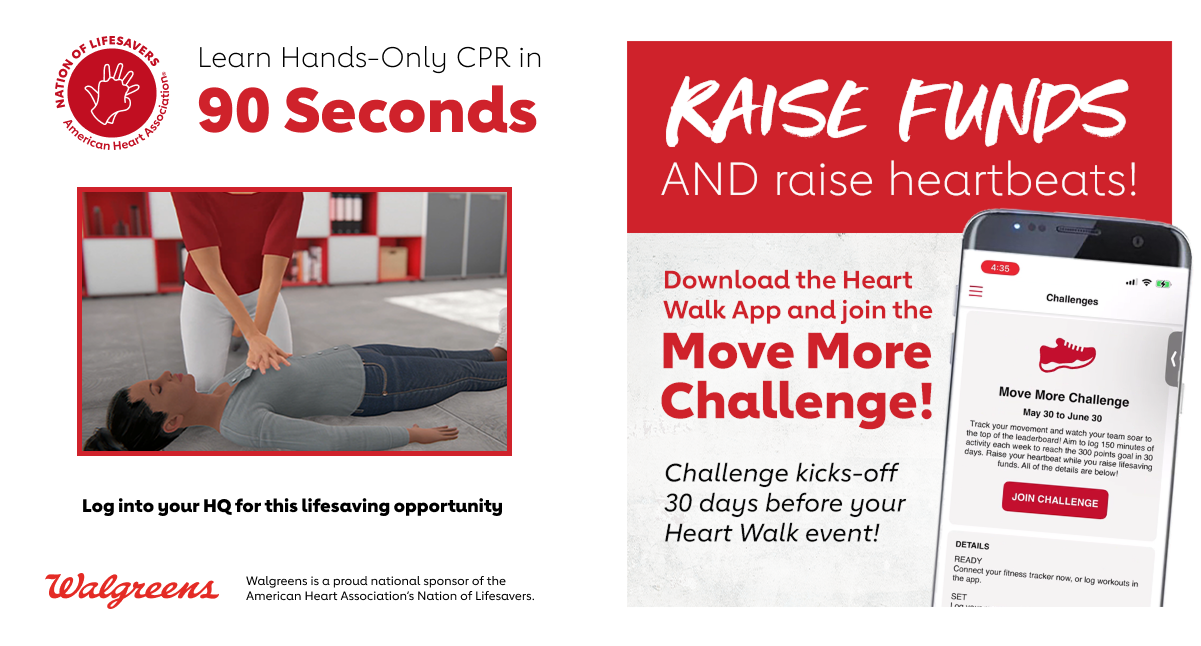
Now is the time to come together, take action, and save lives. Every dollar you donate helps train more people in lifesaving CPR, educates people on those quiet warning signs, supports more research, and creates lifesaving moments for everyone. Together, we can save lives.
I Walk to Educate and Save Lives. Please help me reach my goal today and if you would like, join my Heart Walk team as my family and I will be walking on on June 7th!