


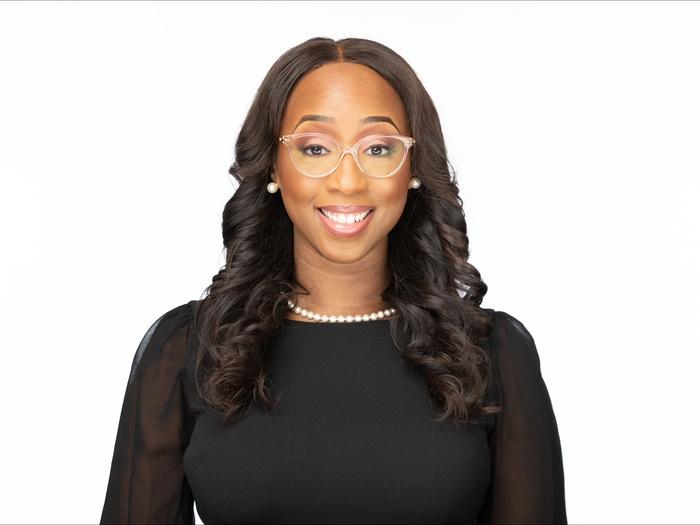
At 41 years old, suffering a stroke and pulmonary embolism was the last thing I ever imagined would happen to me.
On the morning of November 6, 2025, I joined my bi-weekly team huddle at 9:30 a.m. At the time, I was serving as an Integration Manager supporting Project Luminate, the joint venture between Henry Ford Health and Ascension Michigan. It was just two days before our Wave 1 go-live, a major milestone filled with pressure, responsibility, and nonstop activity.
During that meeting, it was my turn to provide an update. As I wrapped up my report, I encouraged my teammates to begin their Go-Live Command Center meetings with motivational reflections, something to help keep everyone calm, grounded, and centered in what would be a fast-paced and demanding environment.
After I finished speaking, I listened as my teammates shared their updates.
Then suddenly, everything changed.
It sounded as though all six people on the call were speaking at the same time. I could no longer follow the conversation. At first, I assumed there was a problem with my laptop speaker or Microsoft Teams.
Then I crossed my arms and realized my left arm was numb.
When the meeting ended, I attempted to stand, but my body felt too weak to move. Thankfully, my boyfriend was with me that morning and helped me settle onto the couch.
He asked what was wrong, but honestly, I think I was in denial. I told him I was probably just tired and needed to rest for a while.
At the time, I had no major health conditions and was rarely ever sick. Nothing about my medical history suggested that something this serious was about to happen.
I eventually drifted off to sleep. When I woke up, I noticed drool on my pillow.
I never drool.
A little while later, my boyfriend looked at me and said, “This isn’t like you.”
I tried to tell him I wasn’t feeling my best, but the words barely came out.
That’s when he immediately said, “I’m calling 911 right now. You are showing signs of a stroke.”
Once EMS arrived, I was somehow able to speak again, but he insisted I still go to the hospital.
At the hospital, a CT scan revealed a clot in my brain. Thankfully, I arrived in time to receive clot-busting medication. Shortly afterward, I was transferred to the main hospital campus, where doctors performed a thrombectomy to remove the clot.
I spent a day and a half in the ICU before being transferred to the neurology floor for additional monitoring.
Then came another shock.
A day later, doctors discovered I also had a saddle pulmonary embolism, a large blood clot extending into both lungs, with additional clots present in my pulmonary arteries. I spent another five days in the hospital receiving intensive treatment, including IV heparin therapy.
By the grace of God, I left the hospital without speech deficits or physical impairments.
Recovery, however, did not end when I left the hospital.
There has been emotional healing.
Mental healing.
Neurological healing.
And there has been the ongoing challenge of learning how to navigate life after surviving something so unexpected.
Even after extensive testing, specialist appointments, and countless follow-up visits, doctors have not been able to determine the exact cause of the clots. Living with unanswered questions has been one of the most difficult parts of this journey, requiring me to lean even more heavily on faith, patience, and trust in God.
There have been moments of fear, frustration, exhaustion, and uncertainty. Yet through it all, God has been faithful.
I believe God truly worked a miracle in my life.
I believe there is a reason I am still here, which means He still has purpose for me.
On the difficult days, I remind myself to keep moving forward.
I have been surrounded by an incredible support system. The love, prayers, encouragement, and care I received from my boyfriend, parents, siblings, godparents, and family members carried me through some of the most difficult and uncertain moments of my life. Their presence reminded me that I was never fighting alone.
Eventually, I was able to return to work. Today, I continue taking my medications faithfully while prioritizing both my physical and mental health.
Looking back, I realize just how blessed I am.
Blessed that someone close to me recognized the warning signs.
Blessed that I reached the hospital in time.
Blessed to have received exceptional medical care.
Blessed to be surrounded by people who loved and supported me.
And blessed to still be here to tell this story.
While my recovery journey continues, I no longer focus on what happened to me. Instead, I focus on what God has done through me since.
As I approach seven months since that life-changing day, I am filled with gratitude, not only for surviving, but for the opportunity to use my experience to encourage others. If sharing my story helps even one person recognize the signs of stroke, advocate for their health, support a loved one in crisis, or trust God through a difficult season, then every part of this journey has purpose.
God is good.