Why I Walk
When I was six years old, my dad collapsed while out on a run. His heart rate had climbed to around 300 beats per minute. We rushed him to the hospital, where doctors used a defibrillator to restore his heart rhythm.
After further testing, he was diagnosed with arrhythmogenic right ventricular cardiomyopathy/dysplasia, or ARVC/D. It is a genetic heart disease that causes healthy heart muscle to be replaced over time by fatty and fibrous tissue. That damage can trigger dangerous heart rhythms and eventually contribute to heart failure.
Since his diagnosis, my dad has experienced many episodes where his implanted defibrillator has had to shock his heart, sometimes multiple times, to restore a normal rhythm. For nearly a decade, he has also been living with congestive heart failure.
The disease has dramatically changed his life. My dad once competed in Ironman races, adventure races, triathlons, and marathons. Over time, his heart condition took away his ability to do many of the activities he loved. He tried taking up pickleball and later returned to cycling, but eventually his heart could no longer tolerate them. Thankfully, he now has a pedal-assist bike that allows him to enjoy riding again, which has been a meaningful bright spot.
His diagnosis also changed what heart health means for our entire family. Because ARVC can be inherited, my brother and I undergo ongoing cardiac monitoring, including EKGs, echocardiograms, heart monitors, and periodic cardiac MRIs. Other generations of our family have also experienced serious heart complications, reinforcing why continued awareness and monitoring matter so much to us.
Living with that uncertainty has made me especially grateful for the medical knowledge, technology, and specialized care that have helped protect my dad and allowed my brother and me to be proactive about our own health. It has also shown me how heart disease can alter an entire family’s life, often in ways that are not visible to others.
That is why the Heart Walk is much more than a community event to me. It represents families like mine, people learning to adapt after a life-changing diagnosis, and the importance of recognizing warning signs and understanding personal and family risk factors. It also brings people together around heart health education, awareness, and research that can lead to earlier detection, better treatment, and more lifesaving moments.
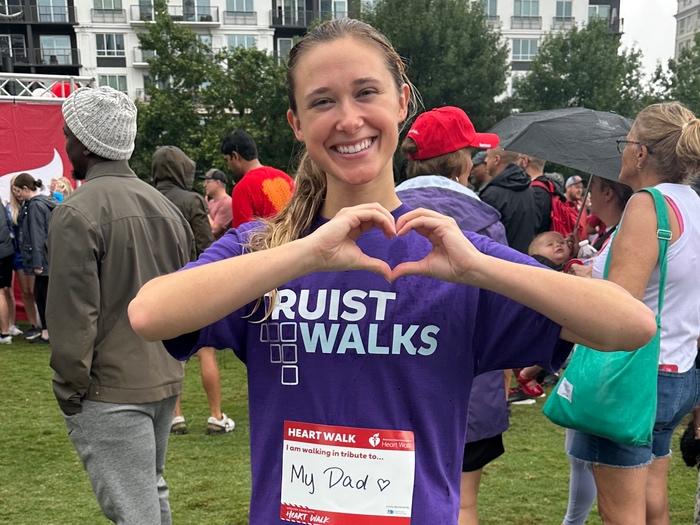
Every step is a reminder that heart health touches all of us. I’m proud to walk alongside Team Truist, my friends, and my community in support of healthier hearts and greater hope for every family affected by cardiovascular disease.